Mazola Wa Mwashighadi: In His Own Words
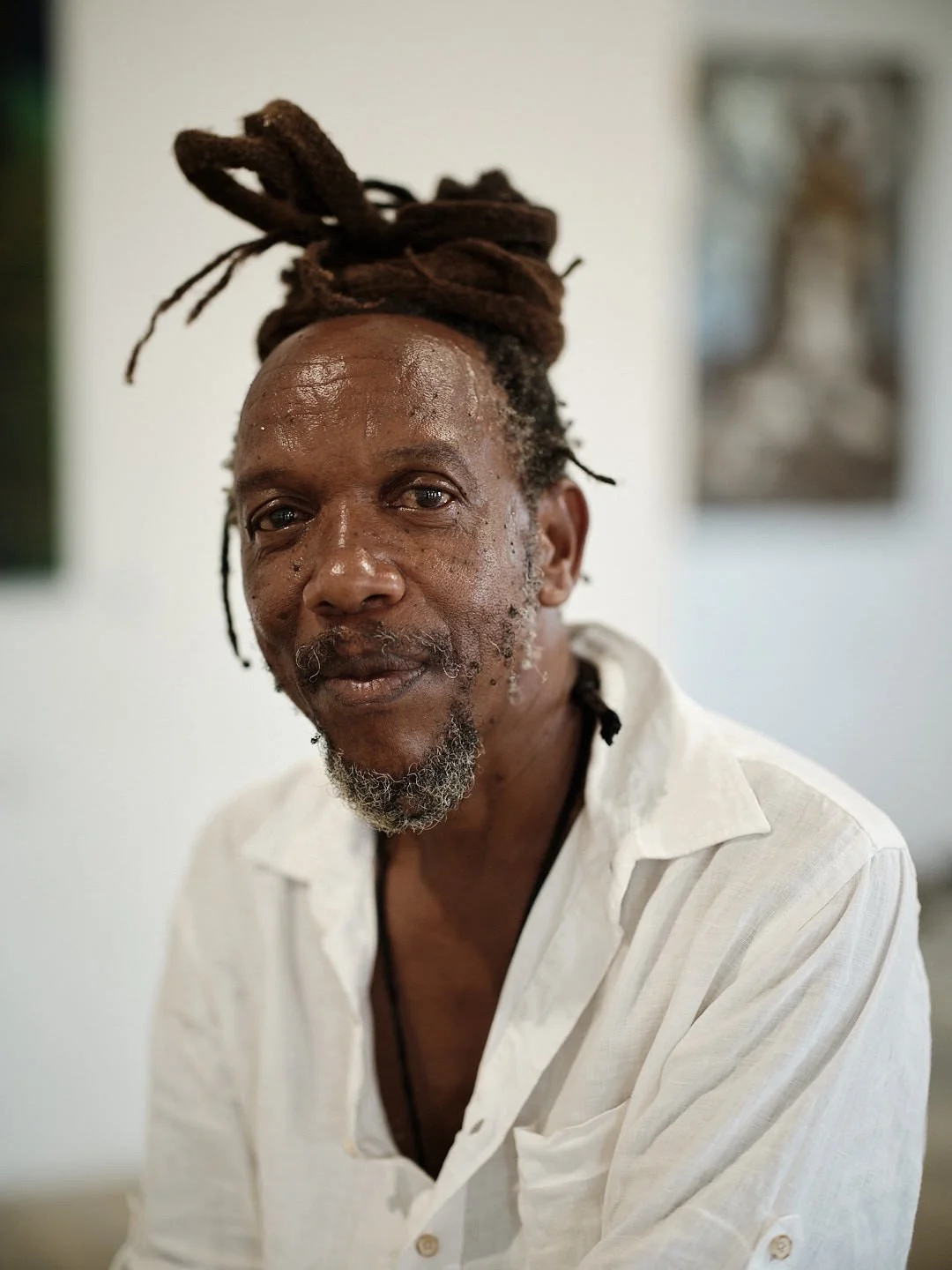
Mazola Wa Mwashighadi, photographed by Kirth Bobb.
Two years ago, I had the privilege of interviewing multidisciplinary artist Mazola Wa Mwashighadi. Our conversation delved into his creative process and how themes of home, identity, and transformation shaped his life and creativity. Born on April 9, 1964, in Kenya’s Taita-Taveta District, Mazola relocated to Jamaica in 2000, where he continued to navigate politics, spirituality, and the human condition through painting, sculpture, and other artistic mediums.
On December 5, 2025, just days before he was set to facilitate a free community art healing workshop in the aftermath of Hurricane Melissa, Mazola was tragically murdered in Treasure Beach, Jamaica. He leaves behind his children, Meloddi, Rodney, and Maguwa, and a legacy that lives on in his work and community. (Click here to watch his celebration of life.)
Below are Mazola’s reflections on his life, his work, and the perspectives that guided both. This conversation took place on August 28, 2024.
Treasure Beach
My day has been quite a mixture of things. I’m doing stuff here, where I live, but I’m also working on the place that I told you about, the Found Object, trying to make sure that it is ready soon so I can move there. It can never be The Playground, the space I had in Kingston, but I think it will be better. I have the liberty to build other structures.
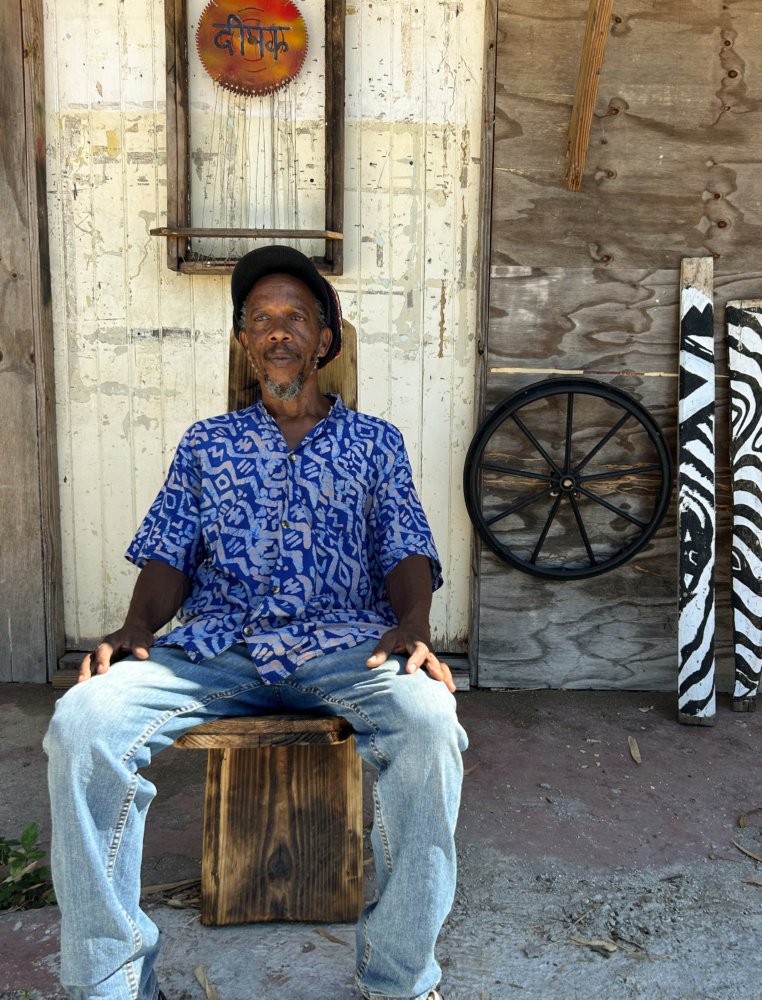
Mazola Wa Mwashighadi pictured at his Found Objects studio and workshop in Treasure Beach (Jamaica). Photo by Tyrone Mckie
After COVID, many things changed. I left Kingston because the owners wanted the place back to start a business. So, I traveled. I came to the States, went to Baltimore to visit a friend, then went to New York, Kenya, and Miami. I came back to Jamaica and had already planned to come to Treasure Beach. Many people were asking me, “Why Treasure Beach?”, and I told them, “I don’t know.” I just had this voice that said, “Just go to Treasure Beach.”
It felt so much like home. It reminded me of when I used to live in Nairobi and go to Maasailand for camping with other artists because—it's the savannah. So, those Acacia trees. The fencing for the animals. It’s a town, but still like a village, and the feeling is good.
I feel more relaxed in Treasure Beach. In fact, it’s a spiritual thing. When I came here, I had time to really reflect on my life because I’ve been working nonstop. I started listening to myself more and reflecting deeper, philosophically. I’ve always been like that, but I don’t think I had that chance in Kingston to think that way.
For example, now that we had Hurricane Beryl, that kind of devastation, many people are looking at it like, “Oh, no, we are done.” For me, when I go see all this mangled wreckage, I’m seeing beauty in it, so I start collecting stuff—the zinc roof, which has been bent over. Violently, yes, but now I am seeing beauty in it. It’s hard to explain fully, but I really feel at home.
Found Objects
I wake up very early in the morning. By 4 AM, I’ll do some stuff, maybe write. At about 5 AM, I go walking. On the road, I start seeing images in objects I find.
There are those artists who use found objects or found materials and call themselves environmental artists. I know, in a way, that I am helping the environment, but the truth is that these materials I pick call to me. I wash and clean them properly and then prepare them for use, whether in sculpture or in the jewelry.
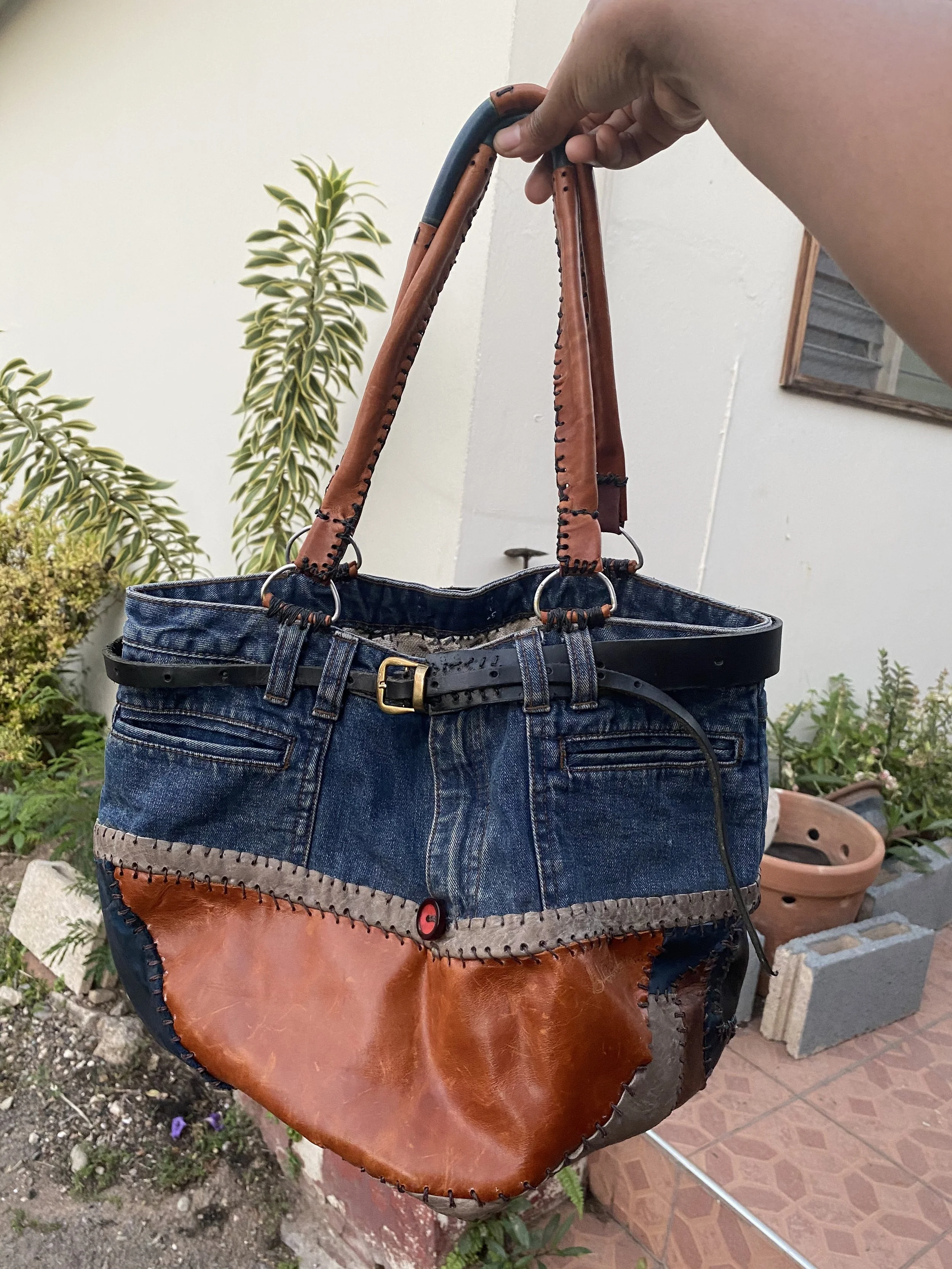
The Miriam Handbag by Mazola Wa Mwashighadi, hand-sewn from leather, repurposed denim, and other materials. Photo by Tori Repole
You’ll find discarded materials in my work, mostly aluminum. There are other materials that I’ll buy, like copper wire, brass wire, and beads. Sometimes people give me jewelry they don’t use anymore, so I clean it and work with it. It’s upcycling, because you give it an oomph, a new life.
The work has its own story. It’s like working with driftwood; you don’t know where it's coming from. I’ll pick something up and drop it in the workshop. Later now, ideas start coming in, and then I remember, “Oh, I have this piece over here. This piece I picked from there.” Then, I start working. I’ll make preliminary sketches, just a little guide for me to start wondering and letting the work take over.
Early Life in Kenya
I was born in a village that was very vibrant. We had a band, which was composed mostly of my uncles from my father's side. They used to have, what we were calling then, “Boogies”, in the daytime. They made their own instruments and composed their songs.
I grew up in music. And then, from an early age, I was writing letters. Writing letters to girls. Teachers were looking at it like, “Oh, this guy is naughty. This guy is poet.” So, I got a lot of punishment. Nobody thought, “He could be a writer. Or, he could be an artist.”
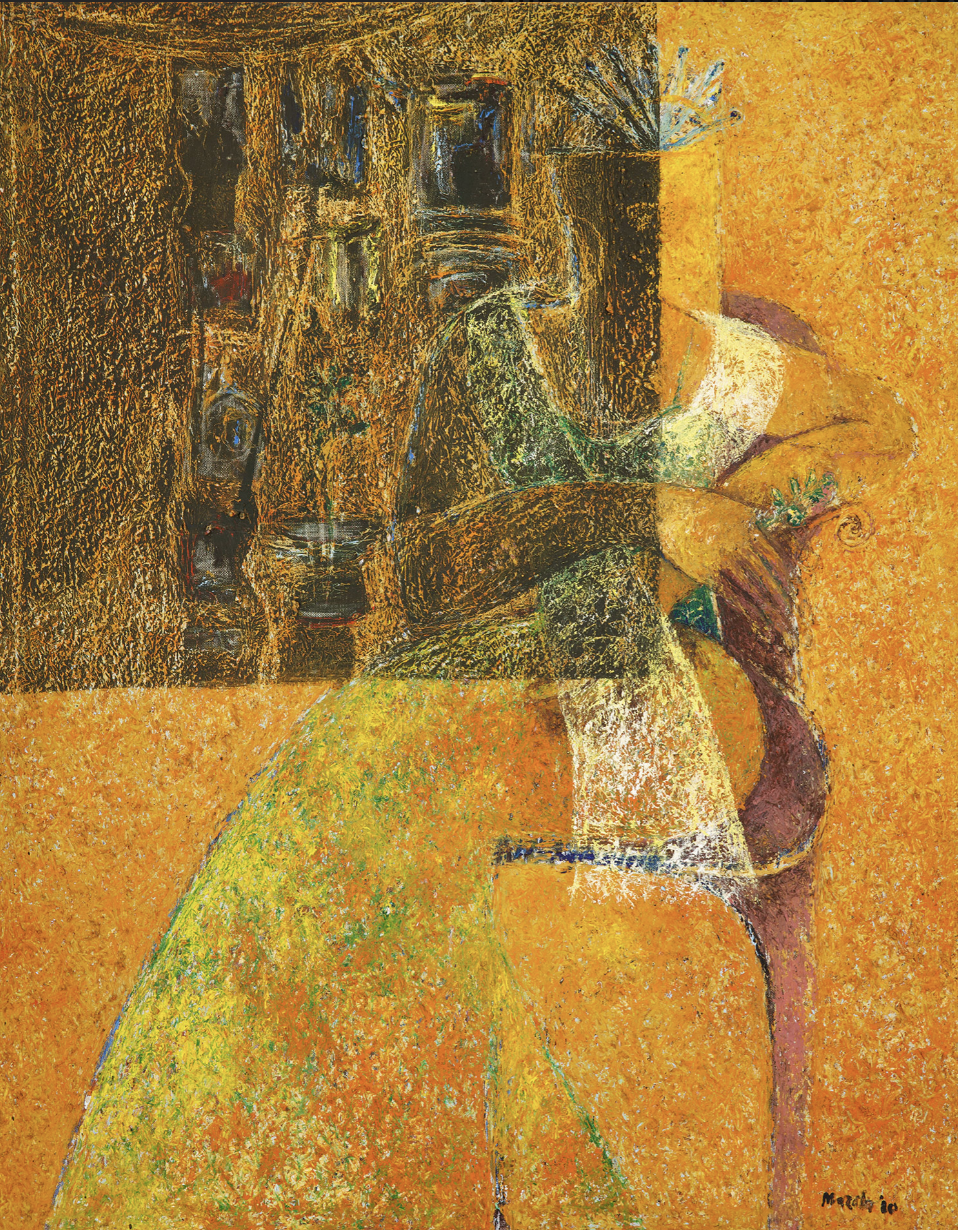
Enthronement of the Matriarch, a 2010 oil-on-canvas by Mazola Wa Mwashighadi. Photo via the Art Auction East Africa website
At that time, there was a gender bias. The boys would do handwork, so we made our own sculptures and guitars. Girls were doing home science and were looked at as, “Oh, they’re just here to look after babies.”
When I was going to the Asumbi Teachers’ Training College, way back in 1985, we were training to be primary school teachers, so we were taught everything. That’s where I learned about sewing. Art and craft, now, was being taught seriously as a subject.
Prior to Teacher’s College, I went to high school in Mombasa and got introduced to reggae. The seamen used to bring all these records from their travels, so I was introduced to this music long time. I heard a lot about Bob Marley and Peter Tosh. My older brother and uncles were very much into rhythm and blues and soul music, so I grew up on American R&B. The reggae part came in at a time when I was going through a lot.
When I was 16, I was framed that I wanted to cause a strike at school. America had sent yellow cornmeal because there was a big famine in Kenya. Somebody went to the boarding master and alleged that I wanted people to strike and refuse to eat. I don’t remember saying anything like that. I was framed, so that cut me.
I got a two-week suspension and was kicked out of the boarding section. I was living with my sisters in a one-bedroom. Nobody from my family came to find out if it was true or who reported it. There was no case. I was just judged and charged. That’s when my life really began.
I went through a lot in high school, and that's when I started writing poetry to try and bash the system. To fight the system, but with the pen. I always tell people that my work—whether it's sculpture or whatever—the foundation is really poetry.
Early Influences
I grew up in a big family. My dad—he was very kind, and he took care of so many people. He was influenced by philosophies like Stoicism, because I never saw him bothered by anything. I never heard him quarrel with anybody, or see him fight anybody. I’ve never fought anyone, actually, in my life.
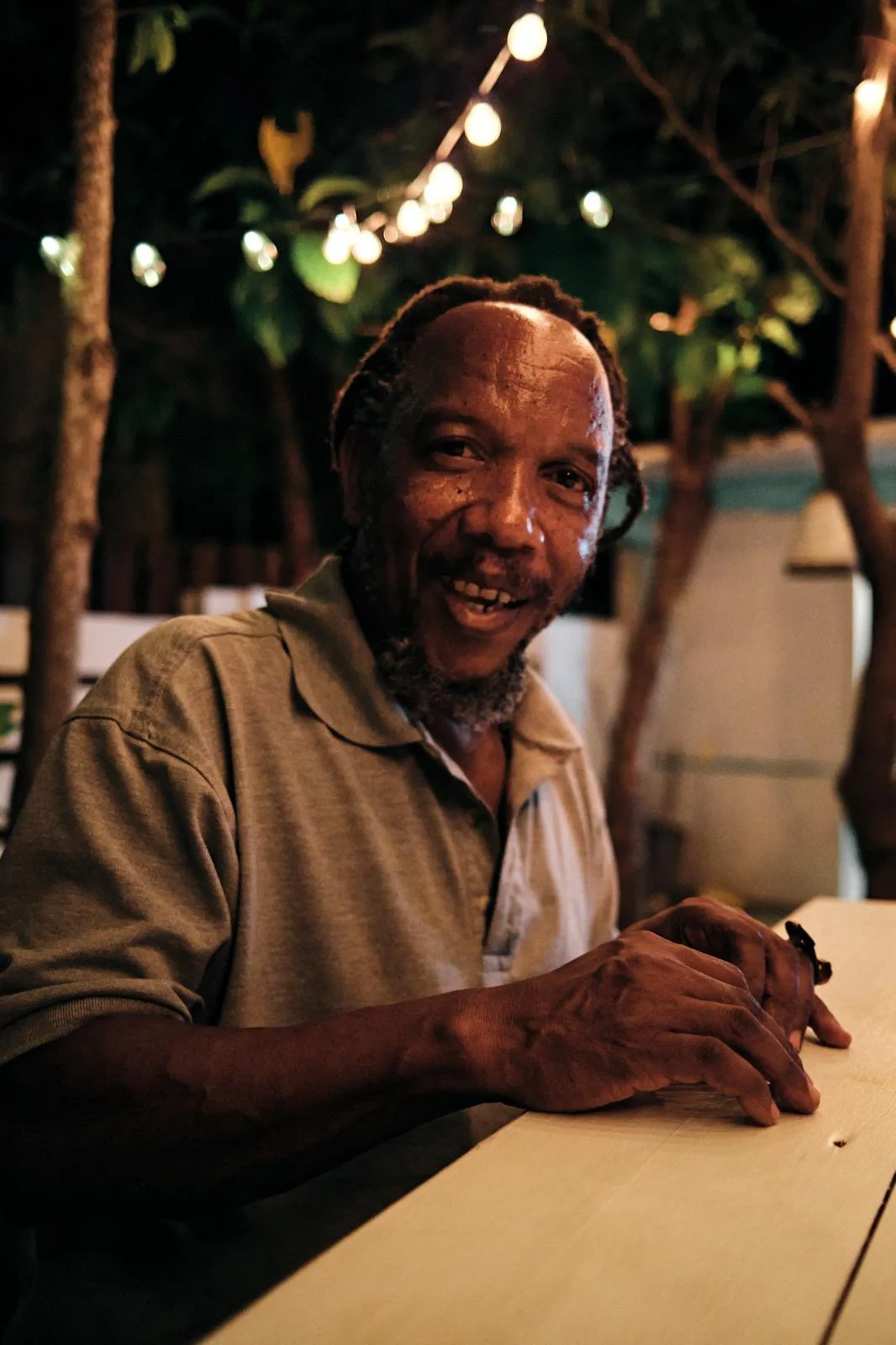
“Whatever I create, every cell in my body is working on that piece and is wholly involved.” - Mazola Wa Mwashighadi. Photo by Kirth Bobb
He was extremely kind to a fault. I think, in many ways, I am as well. When you’re kind like that, you’re going to get in trouble because people don’t really understand that kindness is a power. People look at it as more of a weakness.
My dad worked in Mombasa with the Navy, Army, and Air Force Institute (now the Armed Forces Canteen Organization), so we went to the naval base with him many times. I grew up with soldiers and heard a lot of stuff, so that’s how my work—especially my paintings—ends up being very political, because I experienced many things which were political.
My approach to jewelry—I do mostly earrings. I look at them as mobiles, small sculptures. I used to do really big earrings, but now, I’ve started toning down, thinking of weight and stuff like that. The people who used to wear my earrings had to be really serious about wanting to wear them, because it was really like Maasai jewelry—pulling down their ears and stuff like that.
The paintings are more politics and love stories. The sculptures are more Afrocentric; more into my spirituality. The fetish kind of stuff, which is really an African way, but most people look at it like witchcraft. It’s very interesting, the way people look at our work.
I’m not saying that I create this way because I’m an African, so the work has to be this. It’s just how I see it, or how I’m shown the image, so I try to bring it out in my work. Someone will say, “Who shows you?” I just see these things. If you pay a lot of attention, everything is there, isn’t it?
Maasai Lineage
My great-grandfather was a Maasai, and he was married to a lady who was actually a freed slave. People mostly talk of the Atlantic slave trade, but there was also a slave trade on the other side, and it was the fierceness of the Maasai who prevented them from going into the interior.
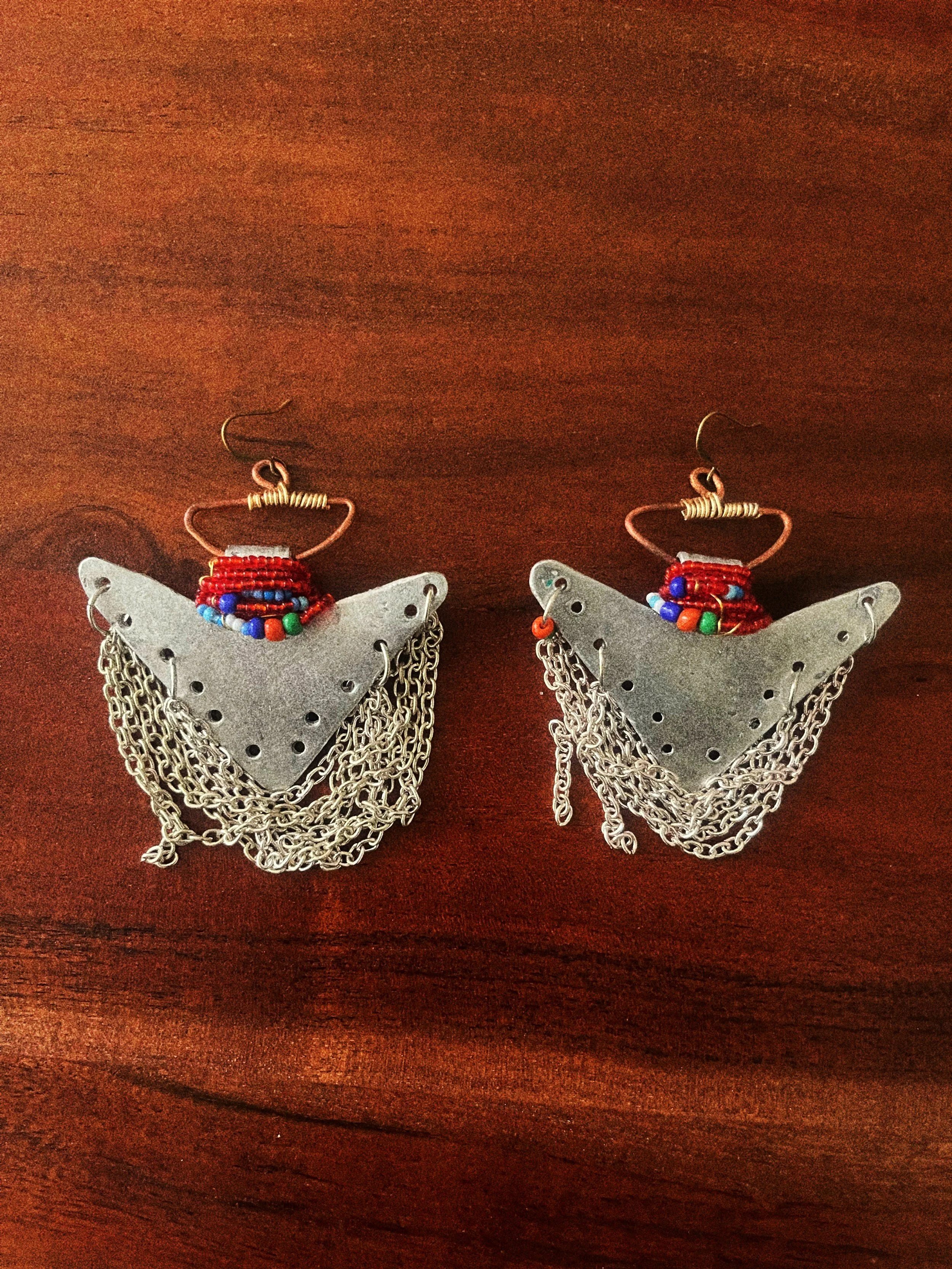
Bow & Arrow earrings by Mazola Wa Mwashighadi. Inspired by the Maasai and the launchpad of life. Photo by Tori Repole
When you go to Kenya, you will find that there is a lot of artwork depicting the Maasai. Although people will say it's tourist art, people who are traveling to Kenya want to have something which is culturally Kenyan. And there is no tribe in Kenya which has adhered to its culture more than the Maasai in terms of dressing.
Maasai represent Kenya. Even the Kenyan flag has a shield and two spears. That’s a Maasai shield. I’m drawn to the Maasai, knowing that I’ve got that connection. Maybe I’m not that tall, but my forehead will tell you.
In my family, we don’t even have to do a DNA test. We just look at the forehead, and I happen to have the longest one. I grew up with people laughing at me, saying I have a head shaped like a bus. So, I started thinking, “How many people does the bus carry? 40? I must have a brain for all these people in my head, so, I'd better use it.” That’s a philosophical way of dealing with issues. I started early, and I don’t know if I can really run away from it.
Coming to Jamaica
I first came to Jamaica in 1997 and stayed to 1998 on the Commonwealth Art and Craft Fellowship Award for the Africa region. There was a culture shock because, when you come from Africa, if you have listened to reggae, these guys are talking about tribal war and love. Then, you realize, it’s not tribal war in Africa, it's tribal war here.
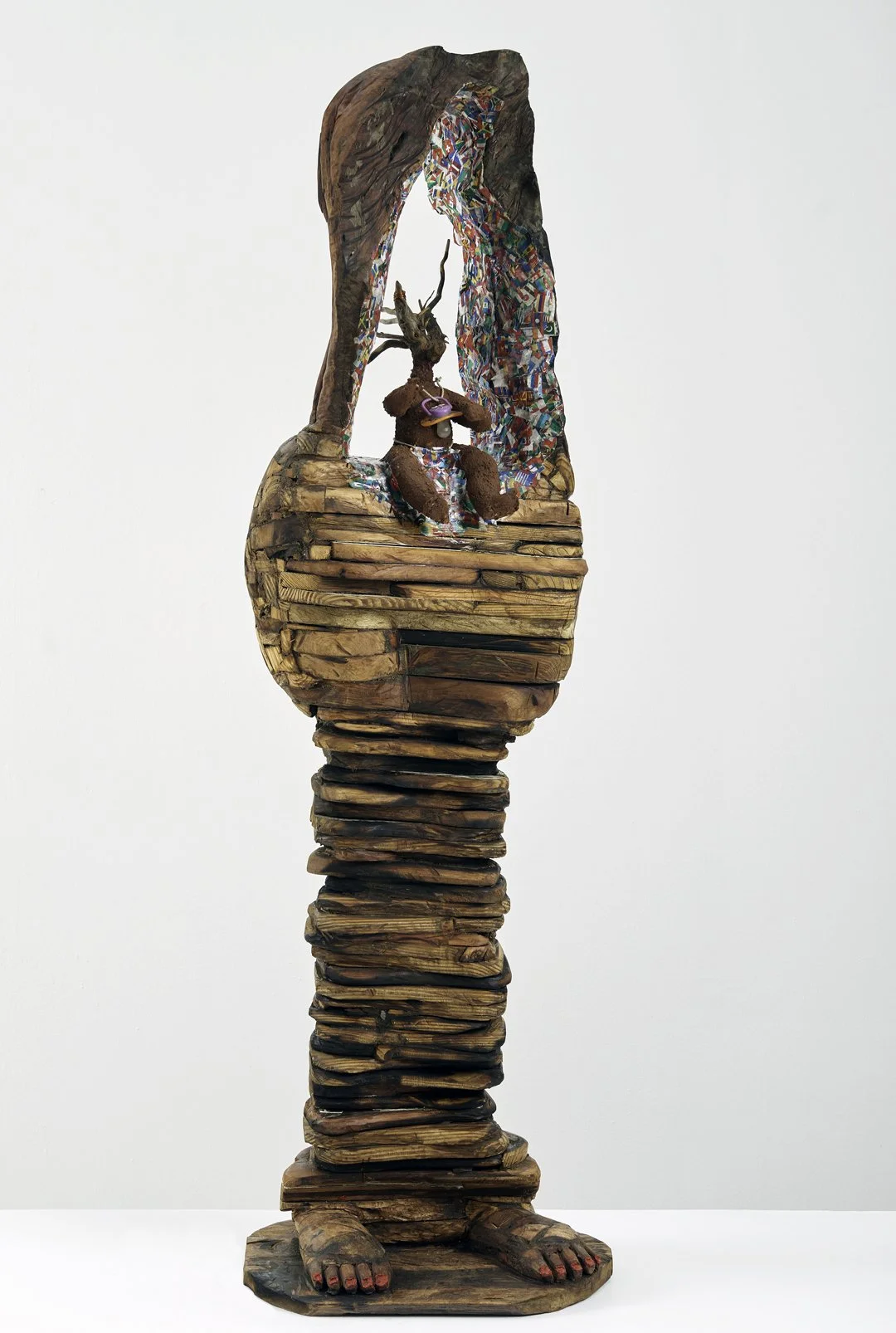
Motherhood, a sculpture by Mazola Wa Mwashighadi. Photo via the National Gallery of Jamaica website
The program that I was doing at the Edna Manley College of the Visual and Performing Arts (Kingston) was supposed to be influenced by my stay here, the culture, and my interactions with the people. So, I went to many shows. Seeing Dennis Brown, Gregory Isaacs—these are people I used to listen to on cassette tapes, so seeing them did something to me.
Bob Marley had passed by then, but I had a chance to go to his museum and do my own writings about his life. I got more into roots reggae and understanding what it is about. Being dreadlocked—of course, everybody thinks you’re a Rasta until you tell them you’re not, and then they’re wondering what's going on here.
I continued working, and my work totally changed because free-form sculpture was my major at Edna Manley. Before that, when I was painting, I used a lot of mixed media, found objects, and would stick them onto the canvas. So, when I came here, all of my collage work went into the sculptures. That’s why in my sculptures, you’ll find beads and whatever, because I am a painter’s sculptor.
I did a lot of business and started selling my work. Ladies were coming to my room all the time, and guys were wondering, “What’s happening with this African man?” Most of them would see me at the sculpture yard, but they didn’t know I was painting in the room.
Edna Manley had a rule that, as a student, you can’t take the easel into your room. I broke that rule and was painting like crazy. So, this is what happened at Edna Manley.
Home & Identity
I, first and foremost, am a human being. Yes, I was born in Kenya, but even if you dropped me in Australia right now, in five minutes you might think I’d been living there all my life. I don’t look at home like—I’m attached, or it has to be there. It’s not a physical place. Home for me is just where I am, and I’m OK. Adaptation is my middle name. Once I know my movements and I can create and get along, I’m OK.
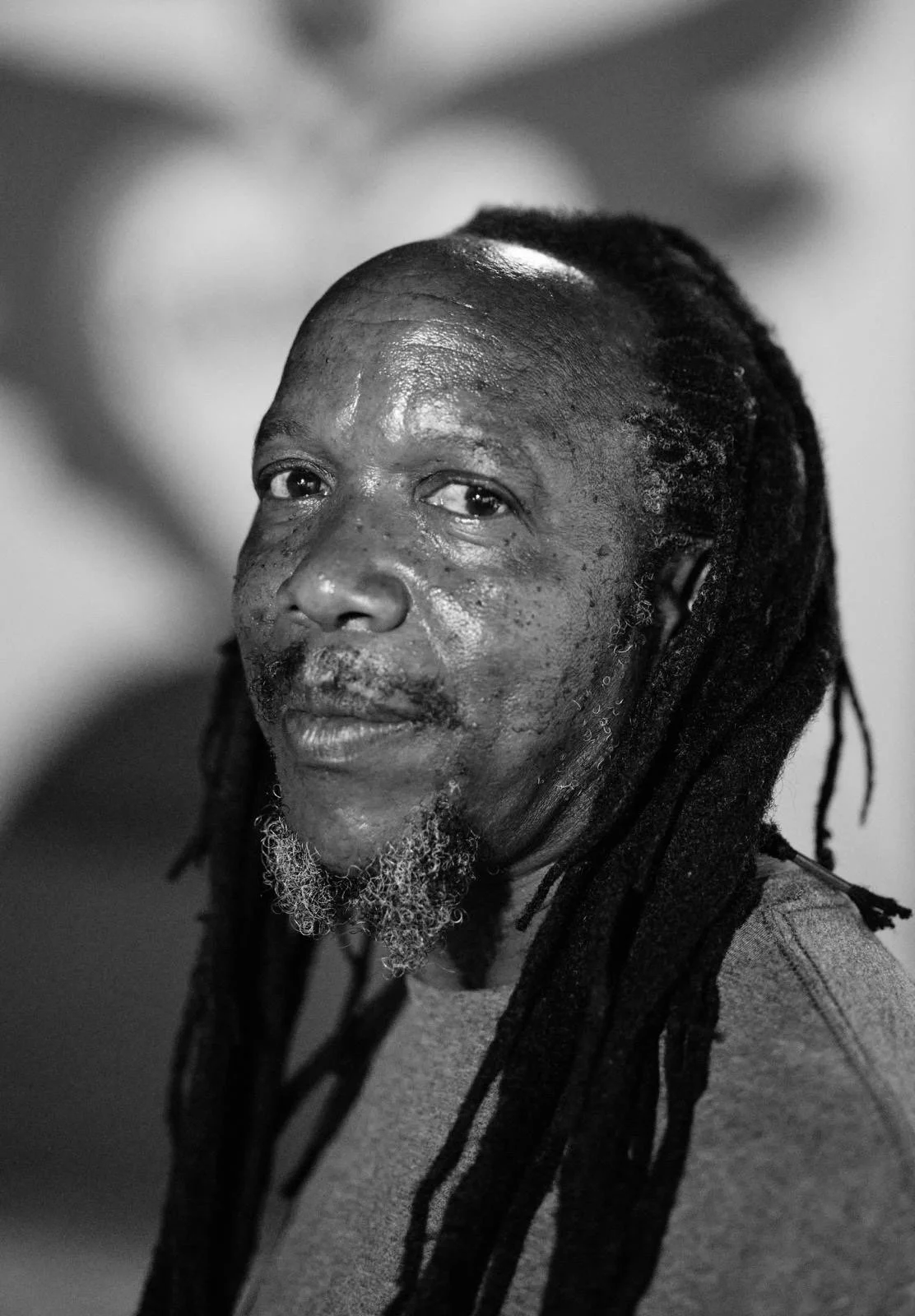
Mazola Wa Mwashighadi, photographed by Kirth Bobb.
That identity, now, you’ll find it percolating in my work. When I do the jewelry, you can see the Maasai part. When I do the sculpture, you can see the African part.
The first time I went to Jamaica, I was told my paintings were so European. I don’t know what they expect. For me, I’m not creating to say, “Oh, because I’m an African, this is this.” Of course, all those things are imbued in me. I don’t think I can run away from them.
There is this issue of, “This is Black art. This is White art.” I don’t know if I can fit into the categorization. Of course, I’ll do Kenyan stories, but I’m doing them my own way. The way I see it and am free to create. The jewelry—yes, I’ll use beads here and there, but I’m reimagining it as contemporary fashion. Not necessarily as Maasai jewelry, but reimagining their jewelry and the way they work, because they work very intuitively.
What you find is that, in the Western concept, there is a lot of use of the intellect, but then sometimes, when we go that way, there is no soul. So, what I want is the experience. Sometimes I’ve gone somewhere, and somebody buys a pair of my earrings, and they remove what they were wearing and wear what they’ve bought from me. That really lifts my heart and tells you something.
My work has really grown, I’d say. Many people here tell me I’m in the wrong place because they are looking more in terms of financial gains. Which is OK, but for me, I’m not hurrying for it. I need to build the work critically, and apart from that, I just can’t leave Jamaica. My daughter is actually going to 4th Form now, and I would’ve denied her the right to have her father. She’s writing now. She’s writing poetry, she’s writing her books.
I am not in a rush. Many people are. They want to be seen, they want to be recognized. There is nothing wrong with that, but for me, I think—just keep on working. I didn’t get into art because I wanted fame or awards. I’ve won awards already. If it is fame, there are those who would say I am famous. Those things don’t bother me; I just want to tell my stories. I am joyful and grateful for every little thing that is happening. The opportunities—they are good. It’s good to take time with them, work, and see how it goes.
A Note from Tori
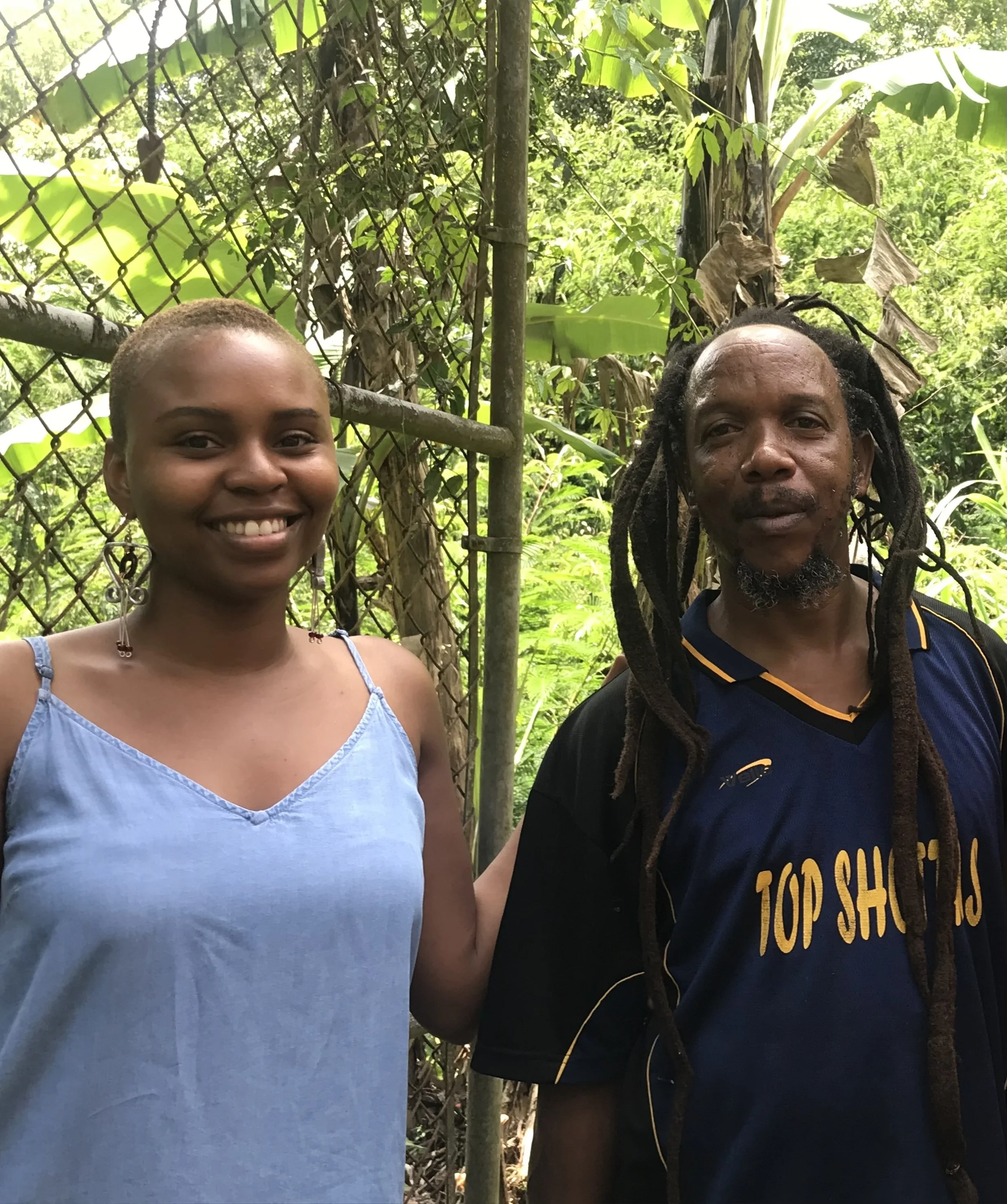
I was gifted my first pair of Mazola’s earrings in 2017. Since then, my “Mazola Collection” has grown to include bangles, handbags, and more earrings than I know what to do with. To know me is to know Mazola’s work, which has become an extension of my identity and self-expression. That will never change.
Thank you for everything, Mazola. Cheers to the life you lived and the legacy you’ve left behind.